

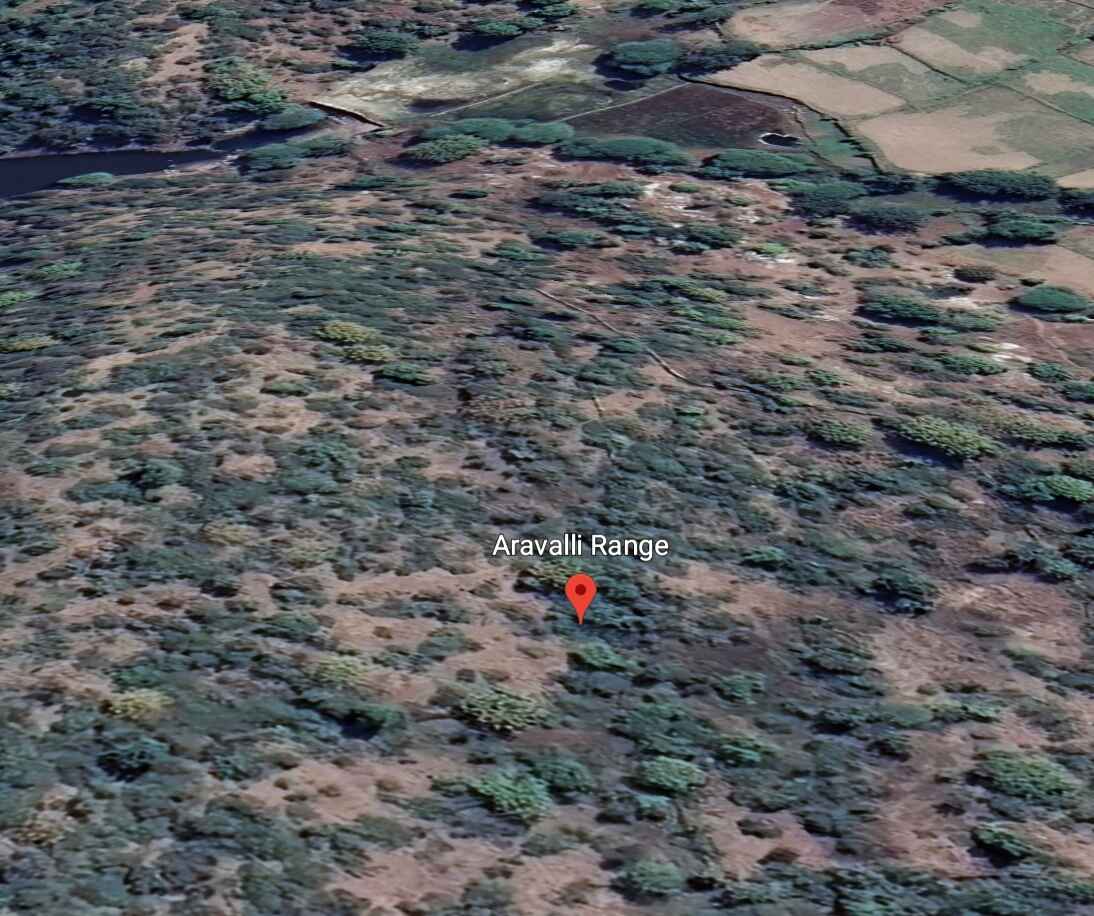
Conflicting definitions, environmental risks and political pushback have put the future of the Aravalli range at the centre of a nationwide debate, as the Centre enforces a complete ban on new mining leases
One of the world’s oldest mountain ranges, the Aravalli Hills, has returned to the national spotlight amid a complex mix of judicial decisions, environmental concerns, government action and intensifying political debate. What began as a legal response by the Centre in the Supreme Court has now snowballed into a nationwide discussion, triggering the ‘Save Aravalli’ campaign across social media and civil society platforms.
Why the Aravalli Range Matters
Geologists consider the Aravalli range to be nearly two billion years old, making it among the most ancient mountain systems on Earth and the oldest in India. Stretching over 800 kilometres from Delhi to Gujarat—more than 550 km of it in Rajasthan—the range acts as a critical ecological barrier. Scientists argue that without the Aravallis, the Thar Desert could have expanded eastward into Haryana, western Uttar Pradesh and even the Indo-Gangetic plains.
Beyond preventing desertification, the Aravallis play a vital role in climate regulation, groundwater recharge and biodiversity conservation. Several rivers, including the Chambal, Sabarmati and Luni, originate from this range. Its forests and rocky ridges also help reduce dust storms, moderate temperatures in NCR cities, and support diverse flora and fauna.
Mining Pressure and Environmental Impact
The Aravallis are rich in minerals such as limestone, sandstone, marble, granite, and metals like zinc, copper, lead and tungsten. This mineral wealth has driven extensive mining for decades. Over the past 40 years, stone and sand mining has intensified, leading to degraded hills, falling groundwater levels and worsening air quality across Rajasthan, Haryana and Delhi-NCR.
Due to these impacts, mining has been restricted or banned in several Aravalli zones at different times. Environmental experts warn that once hill structures and natural drainage systems are destroyed, ecological recovery can take centuries.
The Legal Trigger: How the Issue Reached the Supreme Court
The current controversy stems from a long-standing ambiguity: what exactly qualifies as the “Aravalli range.” Different states and expert bodies have followed varying definitions. In 2010, the Forest Survey of India (FSI) defined Aravalli hills based on criteria such as a slope above three degrees, height above 100 metres, and distance between hills. Critics argued this excluded many ecologically important hillocks.
Recognising the inconsistency, the Supreme Court constituted a new expert committee comprising representatives from the Ministry of Environment, FSI, Geological Survey of India (GSI), state forest departments and court-appointed experts. In 2025, the committee submitted its report, which the court accepted on November 20, stating that only hills above 100 metres would be classified as part of the Aravalli range.
The court-appointed amicus curiae objected, calling the definition “too narrow” and warning it could open lower hills to mining. The Centre, however, argued that earlier FSI norms excluded even larger areas, and the revised definition was comparatively more inclusive.
What the Supreme Court Directed
While accepting the report, the Supreme Court directed authorities to prepare a comprehensive Aravalli management plan. This plan will demarcate:
- Zones where mining will be completely prohibited
- Areas where limited, regulated mining may be allowed
Importantly, the court has maintained a ban on issuing new mining leases until this framework is finalised.
Government’s Firm Stand: Complete Ban on New Mining Leases
Amid growing concerns, the Ministry of Environment, Forest and Climate Change (MoEF&CC) has imposed a complete ban on granting new mining leases across the entire Aravalli landscape, regardless of state boundaries. The objective is to preserve the range as a “continuous geological ridge” from Delhi-NCR to Gujarat.
The ministry has also tasked the Indian Council of Forestry Research and Education (ICFRE) with identifying additional zones where mining should be permanently prohibited and preparing a science-based Sustainable Mining Management Plan. Public consultations will be part of this process.
Existing mines have not been ordered to shut down immediately, but states have been instructed to enforce environmental norms strictly and comply with Supreme Court directions.
How Much of Aravalli Could Be Affected
Experts caution that in Rajasthan, nearly 90 percent of Aravalli hill formations may not meet the 100-metre height criterion. This could mean that only 8–10 percent of hills receive legal protection as “Aravallis,” potentially leaving vast ecologically sensitive areas vulnerable if safeguards weaken.
Environmentalists stress that the Aravallis function as an interconnected ecosystem, not isolated peaks. Even smaller hillocks and ridges are crucial for water flow, forest continuity and climate resilience.
Political and Public Reactions
The issue has rapidly entered political discourse. Former Rajasthan Chief Minister Ashok Gehlot has emerged as a key face of the ‘Save Aravalli’ campaign, warning that weakening protection could lead to severe water shortages, biodiversity loss and rising temperatures. He describes the Aravallis as India’s natural “green wall” against desert expansion.
The BJP has accused the Congress of politicising the matter, while Union Environment Minister Bhupender Yadav pointed to past policy decisions taken during Congress rule. Notably, senior BJP leader and former minister Rajendra Rathore has urged the government to file a review petition, arguing that limiting the Aravalli definition to height alone undermines decades of environmental safeguards.
A Broader Environmental Question
Former GSI Director General Dinesh Gupta has sought to temper fears, stating that desertification depends on multiple factors and that past expert committees had also proposed similar contour-based definitions. However, he acknowledged the need for clear communication to prevent misinformation.
The Road Ahead
At its core, the Aravalli debate goes beyond legal definitions or party politics. It raises a fundamental question about how India balances development, resource extraction and long-term ecological security. With groundwater stress, air pollution and climate risks already mounting, the future of the Aravalli range is increasingly seen as a shared responsibility—of courts, governments and citizens alike.
As awareness grows through campaigns and public debate, the coming months will be critical in determining whether the Aravallis remain a living ecological shield or continue to erode under human pressure.