

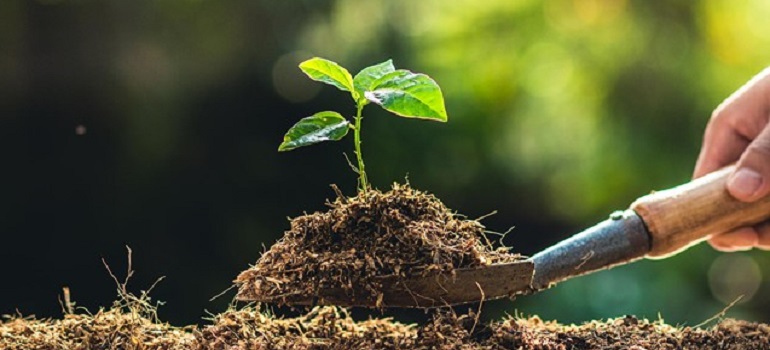
In a notable shift toward integrating ecology with infrastructure, the National Highways Authority of India (NHAI) has unveiled its ‘Arogya Van’ initiative—an ambitious plan to develop medicinal tree plantations along national highways.
Positioned as a biodiversity-enhancing intervention, the project aims to transform idle roadside land into ecological and educational green corridors.
A New Model of Highway Greening
Under the first phase, NHAI plans to develop 17 land parcels across 62.8 hectares, planting over 67,000 medicinal trees across multiple states including Madhya Pradesh, Gujarat, Tamil Nadu, and Delhi-NCR. The initiative introduces 36 medicinal species—such as neem, amla, jamun, and imli—selected based on agro-climatic suitability.
Unlike conventional roadside plantations focused on aesthetics or soil stabilization, ‘Arogya Van’ adopts a thematic approach. By prioritizing medicinal flora, the project attempts to merge biodiversity conservation with public awareness of traditional healthcare systems like Ayurveda. High-visibility zones such as toll plazas and interchanges are being targeted to maximize outreach.
NHAI has also identified 188 hectares of additional land for plantation during the upcoming monsoon, aiming to improve survival rates and ensure long-term ecological value.
Ecological Promise Meets Ground Realities
While the initiative signals a progressive shift, it also arrives against a backdrop of sustained criticism over large-scale tree felling linked to highway expansion. Over the years, NHAI projects have been associated with the removal of tens of thousands of mature trees—many over a century old—including banyan, neem, and peepal.
High-profile projects such as the Mumbai-Nagpur Expressway and the Srinagar Ring Road have reportedly led to the felling of over one lakh trees each, raising alarms among environmentalists. In regions like Punjab, where forest cover is already as low as 3.67%, such losses have intensified ecological vulnerability.
Legal Scrutiny and Public Resistance
Tree-cutting drives have frequently triggered protests and legal interventions. The National Green Tribunal (NGT) has, in multiple instances, stepped in—penalizing NHAI with fines, including a ₹45 crore compensation for environmental damage in Haryana.
More recently, the Punjab and Haryana High Court extended a stay on the felling of 5,000 trees in the Panchkula-Zirakpur corridor, reflecting growing judicial scrutiny over infrastructure-led deforestation.
The Compensatory Afforestation Debate
NHAI maintains that it adheres to a policy of “minimum tree felling” and compensatory afforestation, claiming to have planted over 223 million saplings between 2017 and 2021. However, activists argue that such efforts often fall short in quality, survival rate, and ecological equivalence to mature forests. Concerns over gaps in CAMPA (Compensatory Afforestation Fund Management and Planning Authority) implementation continue to fuel skepticism.
Tree translocation efforts—such as relocating 155 trees during the Delhi-Dehradun Expressway project—are cited as mitigation measures, but experts note that survival rates of transplanted mature trees remain uncertain.
Analysis: Symbolic Shift or Structural Change?
The ‘Arogya Van’ initiative represents a meaningful evolution in how highway infrastructure can contribute to ecological restoration. By focusing on medicinal species, NHAI is not only enhancing biodiversity but also reviving indigenous knowledge systems.
However, the broader environmental impact of highway expansion cannot be overlooked. The success of ‘Arogya Van’ will ultimately depend on whether it complements—or merely compensates for—ongoing deforestation.
For India’s infrastructure sector, the challenge lies in moving beyond plantation-based offsets toward genuinely sustainable planning that minimizes ecological disruption at the source.
Arogya Van could redefine highway landscapes as biodiversity corridors and cultural knowledge hubs. But unless paired with stricter safeguards against large-scale tree loss, it risks being viewed as a green initiative overshadowed by a persistent grey reality.