

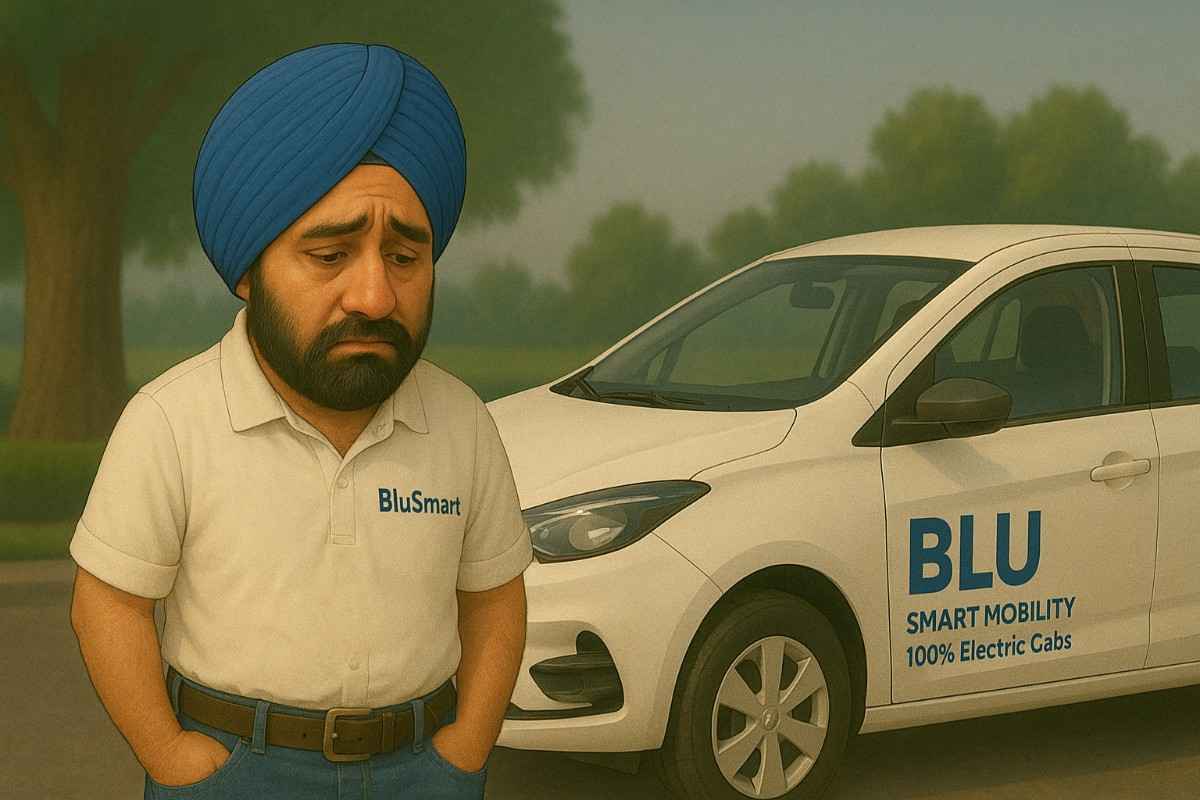
As BluSmart grapples with regulatory investigations, driver exploitation, and alleged fund misappropriation, its future in India’s electric mobility sector remains uncertain.
Once celebrated as India’s promising green mobility solution, BluSmart’s operations are now under intense scrutiny amid serious allegations of financial misconduct and employee exploitation. The startup, which positioned itself as a cleaner and more sustainable alternative to ride-hailing giants Ola and Uber, is now facing credibility challenges on multiple fronts—from poor driver welfare to corporate governance lapses.
Driver Experiences Underscore Harsh Realities
In 2023, a report by Boomlive.com shed light on the distressing working conditions of BluSmart drivers. According to the report, many drivers expressed significant dissatisfaction, citing the lack of support systems and grievance redressal mechanisms within the platform.
More recently, an interaction between a BluSmart driver and our editor offered a personal glimpse into these systemic issues. During a late-night ride from New Delhi railway station, the driver—visibly anxious—shared that he often skips meals to meet the company’s weekly performance targets. When asked why he hadn’t picked up food before beginning his shift, he cited the risk of customer complaints and the subsequent salary deductions. “Some passengers ask us to throw away food because of the smell. If they complain, the company cuts our pay,” he explained.
The driver revealed that he was required to meet a weekly target of ₹9,000. Having failed to do so the previous week, he had earned only ₹500, raising concerns about the sustainability of BluSmart’s compensation policies—especially for those unable to own vehicles and reliant on company-leased EVs.
Regulatory Investigation Unveils Larger Concerns
In June 2024, the Securities and Exchange Board of India (SEBI) launched a probe into BluSmart’s parent company, Gensol Engineering, following allegations of share price manipulation and misappropriation of funds.
A key trigger for the investigation was Gensol’s claim of receiving 30,000 pre-orders for its newly launched electric vehicles, showcased at the Bharat Mobility Global Expo 2025. However, SEBI’s examination revealed that these were not binding orders but merely non-committal Memoranda of Understanding (MoUs) with nine entities, lacking specifics on pricing or delivery.
The situation further deteriorated when a National Stock Exchange (NSE) representative visited Gensol’s Chakan plant near Pune in April 2025. The official observed no ongoing manufacturing activity, with only a handful of workers on-site. Electricity bills also showed minimal usage, reinforcing the absence of operations.
Additionally, a previously announced strategic deal between Gensol and Refex Group—intended to transfer 2,997 EVs and a ₹315 crore loan—was quietly withdrawn within two months of its announcement.
Lavish Expenditure by Founders Raises Eyebrows
SEBI’s interim order has spotlighted the extravagant personal spending by Anmol Singh Jaggi, co-founder of BluSmart and CEO of Gensol Engineering. Reports indicate that over ₹200 crore from government-backed EV loans were misused. While the funds were earmarked for 6,400 electric vehicles, only 4,704 units were reportedly delivered. The remaining funds allegedly financed personal luxuries.
LiveMint and Hindustan Times reported that Jaggi purchased a high-end 7,430 sq. ft. apartment in DLF Camellias, Gurugram, for ₹37.92 crore via Capbridge Ventures LLP, a firm in which he and his brother are partners. The registration alone involved a stamp duty of ₹2.65 crore. Further revelations from SEBI show personal expenditures including ₹1.86 crore worth of dirhams, golf equipment worth ₹26 lakh, high-end spa services, watches, and extravagant credit card usage—funded through company accounts.
The Fall of a Promising Platform
BluSmart’s app, once operational across Delhi and Bengaluru, has reportedly become dysfunctional. Users are unable to book rides, and the wallet feature has been disabled. According to industry insiders, the company may be transitioning away from ride-hailing services entirely.
Media reports suggest a possible shift towards a fleet partnership model, with discussions underway to move 700–800 BluSmart EVs onto Uber’s platform. While no official confirmation or timeline has been released, the pivot marks a significant shift in BluSmart’s business model.
This organizational flux is also marked by a series of high-profile leadership exits, further destabilizing the company’s outlook.
Investor Reactions and Public Sentiment
Ashneer Grover, co-founder of BharatPe and an early investor in BluSmart, publicly addressed the crisis, distancing himself from the controversy. Grover stated that he had personally invested ₹1.5 crore in BluSmart and ₹25 lakh in Matrix, expressing frustration over the mismanagement and his own financial losses. “Dragging my name into this is shameful,” he said. “In fact, I’m a victim of the situation.”
Meanwhile, ex-Google MD Parminder Singh shared a heartfelt post about his family’s reliance on BluSmart for daily commutes, even stating they avoided buying a car because of the service’s reliability. Singh offered his support to help salvage the company.
Some Unanswered Questions
The unfolding crisis raises critical questions that remain unaddressed. Public financial institutions such as IREDA, PFC, and REC have once again suffered losses—were internal lapses or complicity by officials involved? If so, who benefited, and how were these funds diverted without detection?
The role of regulators also comes under scrutiny. Why were early warning signs overlooked? Were there deliberate efforts to suppress red flags—and if so, who enabled this silence?
Auditors, too, face tough questions. Were their responsibilities compromised, and how will the National Financial Reporting Authority (NFRA) ensure accountability?
Finally, the silence of independent directors is equally concerning. What role did they play, and why was there no intervention?
These questions deserve urgent answers as the larger narrative of innovation and sustainability unravels.
What was once hailed as a transformative force in India’s EV mobility landscape is now under intense scrutiny. From driver hardships and misleading corporate announcements to regulatory crackdowns and executive extravagance, BluSmart’s story underscores the need for accountability, transparency, and ethical leadership in India’s startup ecosystem.
As investigations continue and the company considers a pivot, the future of BluSmart hangs in the balance—offering a cautionary tale for startups operating at the intersection of sustainability and innovation.