

Explore the key differences between climate anxiety and eco-anxiety, why these terms are gaining global attention, and how to cope with rising environmental stress.
Ever feel a knot in your stomach when you hear about wildfires, floods, or melting ice caps? You’re not alone. In a world grappling with environmental challenges, terms like “climate anxiety” and “eco-anxiety” are popping up everywhere. While they sound similar, understanding their subtle differences can help us navigate these big feelings. And trust us, you’re not the only one searching for answers – global interest in these topics is soaring!
What Exactly Is Climate Anxiety?
Imagine worrying about the future of our planet, specifically due to the dramatic shifts in our climate. That’s “climate anxiety.” It’s that persistent unease or fear you feel when you hear about extreme weather events, see global temperatures rising, or realize glaciers are shrinking. It’s a direct response to the clear and present dangers of climate change itself.
If you’re experiencing climate anxiety, you might feel:
- Helpless as you watch climate predictions worsen.
- A pang of guilt about your own carbon footprint.
- Frustration with how slowly political leaders or big corporations seem to be acting.
- Deep fear for what the future holds for your kids and grandkids.
- Think of it this way: Climate anxiety is all about the specific threats and long-term impacts of climate change.
So, What’s Eco-Anxiety Then?
“Eco-anxiety” is a broader umbrella term. It’s a general worry about the health of our environment as a whole. This includes, but isn’t limited to, climate change. It encompasses concerns about things like:
- Massive deforestation
- The alarming loss of animal and plant species (biodiversity loss)
- The constant presence of pollution in our air, land, and water
- The acidification of our oceans
Someone feeling eco-anxiety might: - Feel totally overwhelmed by the sheer scale of environmental damage.
- Experience genuine distress when they see litter, witness habitat destruction, or hear about another species going extinct.
- Even develop strong, sometimes obsessive, behaviors around living sustainably.
Simply put: Eco-anxiety covers your worries about the entire ecosystem, not just the warming planet.
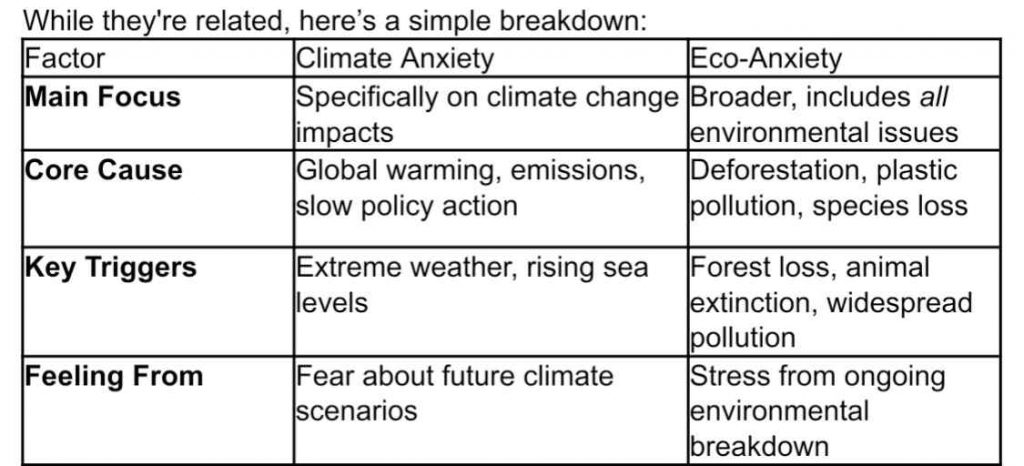
Climate Anxiety vs. Eco-Anxiety: A Quick Look at the Differences
Why Are More People Searching for These Terms Globally?
It’s not just you! There’s a clear reason why searches for “climate anxiety vs eco-anxiety” and “what is climate anxiety” are on the rise:
- News Overload: When we see constant headlines about devastating wildfires in Canada, record-breaking heatwaves in Europe, or severe floods in Asia, it’s hard to ignore. This constant media coverage understandably amplifies our awareness and often, our fear. We then turn to search engines to understand what we’re feeling.
- Youth Power (Especially Gen Z): Young people, particularly Gen Z, are incredibly vocal about environmental issues. Movements like “Fridays for Future” have given us a common language for these “eco-emotions.” This has normalized terms like “climate anxiety” in everyday conversations and online searches.
- Social Media’s Echo Chamber (in a good way!): Platforms like TikTok, Instagram, and Twitter are buzzing with content related to eco-anxiety. Hashtags like #climateanxiety and #ecogrief go viral, sparking curiosity and encouraging more people to search for what these terms mean and if others feel the same way.
- Open Conversations About Mental Health: Thankfully, the stigma around mental health is slowly fading. This means more people feel comfortable acknowledging and exploring their emotional responses to the environment. Psychologists and therapists are also stepping up, openly discussing these “eco-emotions” in public forums, which encourages more people to seek understanding.
- Learning in the Classroom: Schools and universities are increasingly incorporating climate education into their curricula. This means students are more informed about environmental threats, making them more likely to experience and, consequently, search about terms like “eco-anxiety.”
How to Cope When the World Feels Heavy
It’s important to remember that feeling “climate anxiety” or “eco-anxiety” is a completely valid response to a real and urgent crisis. But there are healthy ways to manage these feelings:
- Stay Informed, But Take Breaks: It’s good to know what’s happening, but constantly consuming overwhelming news can be draining. Give yourself permission to unplug.
- Connect and Act Locally: Joining local environmental groups or activism communities can be incredibly empowering. Taking action, even small steps, can reduce feelings of helplessness.
- Focus on What You Can Control: Think about your personal impact. Reducing waste, supporting sustainable brands, or conserving energy are tangible actions that can make a difference and give you a sense of agency.
- Practice Self-Care: Mindfulness, spending time in nature, exercise, or hobbies can help reduce stress and ground you.
- Seek Support: If your feelings become overwhelming, don’t hesitate to reach out to mental health professionals who understand eco-conscious concerns. Many therapists are now specializing in “climate-aware therapy.”
You’re Not Alone in This
“Climate anxiety” and “eco-anxiety” are powerful indicators of our deep concern for the health of our planet. While they have different scopes, both stem from a profound care for Earth’s future. The increasing global search interest for terms like “rising eco-anxiety” and “mental health and climate change” shows that these aren’t isolated feelings. Recognizing and addressing these emotions isn’t a weakness; it’s a vital step towards building personal resilience and inspiring collective action for a healthier world.