

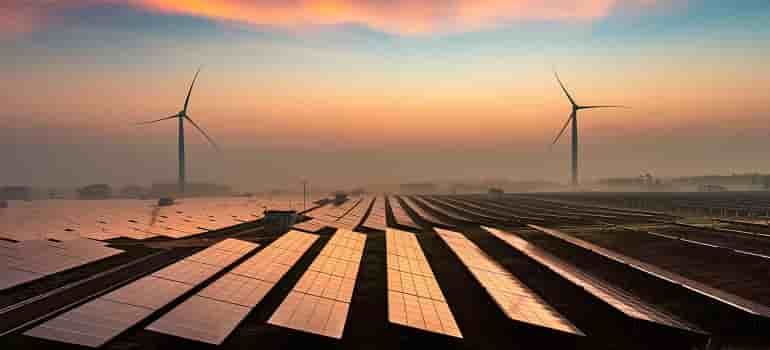
The tripartite MoU under the StoREin project will pilot battery storage in Gujarat’s distribution grid, paving the way for nationwide renewable energy integration and grid resilience.
In a strategic move to strengthen India’s renewable energy transition, Deutsche Gesellschaft für Internationale Zusammenarbeit (GIZ) GmbH, The Energy and Resources Institute (TERI), and Gujarat Urja Vikas Nigam Limited (GUVNL) have inked a tripartite Memorandum of Understanding (MoU) under the Energy Storage for Renewable Energy Integration in India (StoREin) project.
The partnership aims to test and validate the technical and commercial feasibility of Battery Energy Storage Systems (BESS) in Gujarat’s power distribution grid, while framing policy and regulatory pathways to scale such solutions nationwide.
Why Energy Storage Matters for India’s Renewable Push
India’s renewable energy capacity has expanded rapidly, but the intermittency of solar and wind power continues to challenge grid stability. Gujarat, the country’s leader in rooftop solar installations and renewable energy additions, is now pushing to integrate large-scale storage to manage fluctuations at the distribution level.
Energy storage at substations and feeder points is becoming critical for ensuring a reliable and resilient power system. Through this MoU, pre-feasibility studies will identify optimal sites and applications for BESS within GUVNL’s network, followed by the development of sustainable business models. TERI will prepare a Detailed Project Report (DPR), while GUVNL will launch tenders for pilot and demonstration projects.
Global-Local Collaboration for Clean Energy
The StoREin project is being implemented by GIZ on behalf of the German Federal Ministry for Economic Affairs and Energy (BMWK) under the International Climate Initiative (IKI), in close cooperation with India’s Ministry of New and Renewable Energy (MNRE).
Alongside TERI, research partners include the Fraunhofer Institute for Energy Economics and Energy System Technology (Fraunhofer IEE), IIT Bombay, and WRI India.
Bernhard Voelcker, Head of StoREin Project at GIZ India, stressed that identifying diverse use cases for energy storage and proving their commercial viability is central to accelerating adoption. Echoing this, Alekhya Datta, Fellow & Director at TERI, underscored that battery storage pilots are a priority for achieving India’s clean energy ambitions.
For GUVNL, the partnership is seen as a cornerstone of Gujarat’s green transition. “This collaboration will significantly advance renewable integration with storage solutions, enhancing the resilience of our power sector,” said Sourav Nandy, GM, F&A at GUVNL.
National Impact: Towards 500 GW by 2030
With India’s target of achieving 500 GW of non-fossil fuel energy capacity by 2030, the Gujarat demonstration is expected to serve as a replicable model for other states. If successful, it could pave the way for decentralized storage deployment, improved grid reliability, and faster adoption of renewable energy across the country.
Why This MoU Is a Turning Point
- Bridging the intermittency gap: By piloting BESS at the distribution level, the initiative directly addresses renewable variability, one of India’s most pressing clean energy challenges.
- Policy push: The project’s policy and regulatory outputs could accelerate national-level guidelines for energy storage, an area still in its infancy in India.
- Replication potential: Gujarat’s leadership makes it a testbed for scalable solutions that can be adapted in states with growing renewable portfolios.
- Global expertise, local execution: The integration of German technical expertise with Indian research and utility networks reflects the importance of international cooperation in climate action.
If executed successfully, the GIZ–TERI–GUVNL collaboration could mark a turning point in India’s transition to a renewable-powered, storage-supported grid.