

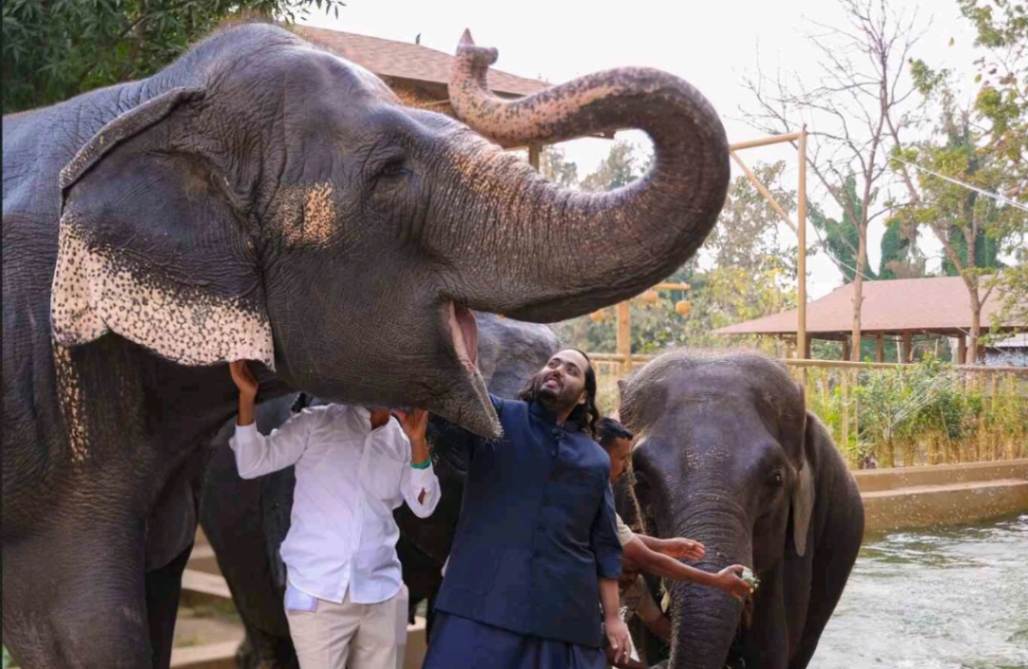
The apex court has formed a Special Investigation Team led by Justice Jasti Chelameswar to investigate charges of unlawful wildlife trade, captive elephants, and financial irregularities at Gujarat’s Vantara facility, as concerns over media censorship and international scrutiny intensify.
On August 25, 2025, the Supreme Court of India directed the formation of a Special Investigation Team (SIT), led by retired Justice Jasti Chelameswar, to probe serious allegations regarding the Vantara wildlife facility in Gujarat. The facility, privately managed and promoted as a high-profile conservation project, faces accusations ranging from unlawful wildlife transfers and captive elephants to financial irregularities and corporate misuse of conservation narratives.
Key Developments
SIT Mandated to Investigate Vantara (Jamnagar Wildlife Facility)
- The SC Bench comprising Justices Pankaj Mithal and Prasanna B. Varale acknowledged the gravity of the allegations despite procedurally serious grounds for dismissal, citing concerns that statutory bodies and courts might be unwilling or unable to act without independent verification.
- The SIT will be chaired by retired SC judge Justice Jasti Chelameswar, with members including former High Court Chief Justice Raghavendra Chauhan, ex-Mumbai Police Commissioner Hemant Nagrale, and senior IRS officer Anish Gupta.
- Probing points include: legality of animal acquisitions (domestic and international), CITES compliance, wildlife welfare standards, misuse of water or carbon credits, and allegations of money laundering and vanity collection.
- The SIT must file its report by September 12, with the PILs to be heard again on September 15.
Vantara Under Intense Scrutiny: Allegations & Press Suppression
From investigations by ,Himal Southasian, and others:
- Disappearing Reports and Intimidation
Investigative coverage by publications like The Telegraph, Deccan Herald, The Tribune, The Financial Express, and others vanished without formal explanations. Journalists reportedly received threatening calls, emails, or legal notices demanding content removal. - Wildlife Trade and Ethical Concerns
A report from the Wildlife Animal Protection Forum of South Africa (WAPFSA) alleged that animal transfers—including from South Africa—may masquerade as rescues but may actually constitute commercial wildlife trade.
The German Süddeutsche Zeitung investigation, referencing databases and trade sources, estimated that over 39,000 animals from 32 countries—including rare species such as mountain gorillas and orangutans—were transferred to Vantara, often from regions linked to trafficking. The report questioned the authenticity of their sourcing, suspecting wild-caught animals disguised as captive-bred. - Vantara’s Defense
The facility insists all animals are legally rescued or captive-bred, backed by CITES permits and Central Zoo Authority (CZA) documentation. It has termed the trafficking allegations “baseless” and initiated legal action. - Legal Pushback Strengthens Journalism Shield
Vantara’s legal attempt to remove Himal Southasian‘s critical article was rejected by the Delhi High Court on May 19, 2025. The court ruled no judicial directive existed, dismissing the purported contempt petition. Legal observers saw this as an example of a SLAPP (Strategic Lawsuit Against Public Participation) aimed at stifling legitimate journalism.
Insights & Implications
| Issue | Impact |
|---|---|
| Press Freedom Under Threat | Media suppression—especially via legal intimidation or anonymous threats—raises concerns about the erosion of journalistic independence in environmental reporting. |
| Private Conservation vs. Corporate Image | Vantara, while billed as a conservation effort, is increasingly seen by critics as a “vanity” project—acquiring large numbers of animals for prestige rather than welfare. |
| International Oversight and Accountability | The involvement of CITES, South African NGOs, international media, and a court-appointed SIT reflects growing scrutiny beyond borders. |
| Legal Precedent | The Delhi HC’s rejection of Vantara’s contempt suit underscores judicial safeguards against frivolous attempts to suppress dissent. |
| Role of Civil Society & Media | Persistent reporting by independent outlets like Himal Southasian and Climate Samurai underscores the importance of media in ensuring accountability—despite escalating pressure. |
The unfolding Vantara saga marks a pivotal moment: the Indian Supreme Court has initiated judicial action to investigate deep-seated environmental, legal, and ethical concerns surrounding one of the nation’s most high-profile wildlife facilities.