

Transforming climate commitments into rapid, inclusive protection for those most exposed to climate risks
The Gathering Storm
In recent weeks, the extensive damage to agriculture, with 87,000 hectares of cropland inundated and bridges, culverts, and roads destroyed by Cyclone Montha in the coastal districts of Andhra Pradesh, India, has underscored the growing threat of climate-related disasters. Similar devastation was seen in Jamaica, where Hurricane Melissa displaced thousands and crippled key infrastructure, and across Southeast Asia where successive typhoons such as Kalmaegi and Bualoi swept through the Philippines, Vietnam and Thailand, leaving hundreds dead and thousands homeless. Together, these events are a stark reminder that climate change driven extreme weather events will continue to affect marginalized populations in climate vulnerable nations with increasing frequency.
Despite billions of dollars being pledged under global climate finance mechanisms, the most climate vulnerable communities remain underprepared, uninsured, and largely excluded from formal systems of protection. Funds committed through international agreements often move slowly, filtered through layers of bureaucracy and complex eligibility criteria. As a result, the communities most exposed to climate shocks, whether informal workers, small farmers, or coastal and low-income urban households, rarely see tangible benefits from these flows of finance.
At the global level, climate finance will take centre stage in Belém, building on the COP29 pledge by developed nations to mobilize at least $300 billion by 2035. Negotiations are expected to endorse the ‘Baku-to-Belém Roadmap’ which aims to raise $1.3 trillion per year by 2035. The roadmap will need to show how public funds, private investment and innovative sources such as carbon levies and multilateral bank reforms can finally bridge the gap between pledges and delivery.
This gap mentioned here is not only financial but also structural. Global climate finance mechanisms tend to prioritise large scale infrastructure or national level projects, often at the expense of the everyday adaptation and resilience needs of households and local economies. While the United Nations Framework Convention on Climate Change (UNFCCC) adaptation agenda and the recently constituted Fund for Responding to Loss and Damage (FRLD) have emphasised the need to help vulnerable countries cope with climate impacts, most discussions remain focused on frameworks, pledges, and high level financing mechanisms rather than local implementation.
The Missing Link
Bridging this gap requires a shift in imagination, moving from funding projects that merely respond to community losses to co-creating solutions with communities and designing programmes that reach those on the frontlines of a changing climate. There is a need for a climate finance paradigm that prioritises interventions not only at the national level but also at the regional and local levels. Climate-relevant social protection measures, such as disaster insurance coverage, early recovery support, and adaptive finance at the community level, remain relatively rare.
The real challenge lies in turning global commitments into concrete, implementable models that reach the communities most affected by climate change. This is where civil society organisations (CSOs) can play a critical role. CSOs can act as innovators and practical laboratories in climate finance, occupying the institutional space between markets and the state. Their close community relationships allow for nimble experimentation and the prototyping of financial models that can later be evaluated, refined, and scaled.
Blended finance approaches that combine philanthropic, private, and public capital are particularly important in this context. They enable CSOs to de-risk innovation while generating evidence for what works in different settings. In doing so, CSOs can strengthen state capacity and help bridge the gap between the aims of global climate finance and the real needs of vulnerable and marginalised communities.
A Pilot for Resilience
With this imperative in mind, a pilot programme has been launched in the Cuddalore district of Tamil Nadu – the first of its kind parametric insurance cover for coastal communities who have faced sustained losses due to the increasing frequency of cyclones.
In this model, parametric insurance serves as a financial tool where payments are triggered automatically when predefined parameters are breached, in this case, cyclone wind speed and proximity to a reference point along the coast. This differs from conventional indemnity insurance, where payouts occur only after a lengthy claims assessment. Here, cyclone affected households receive direct benefit transfers within three weeks of the trigger event, ensuring speed and transparency.
Equally important has been the process of building trust through community consultation and the co-creation of insurance triggers. This participatory design has ensured that the model reflects local realities and priorities. The pilot offers policymakers a valuable opportunity to assess how such models can be implemented rapidly, remain contextually relevant, and be led by communities themselves. Its ability to effectively address cyclone related losses will be key to determining its success and potential for scale.
Towards a New Climate Finance Imagination
The scale of climate change demands urgent attention, but this urgency must not push policymakers toward creating universal, one size fits all models. The diversity of experiences across contexts and communities calls for the development of an institutional ecosystem that enables innovation, fostering diverse, scalable, and effective approaches tailored to actthe needs of those most affected by climate impacts. Building climate resilience at scale will therefore depend not only on how much finance is mobilised, but also on how creatively and inclusively it is applied.
AUTHOR
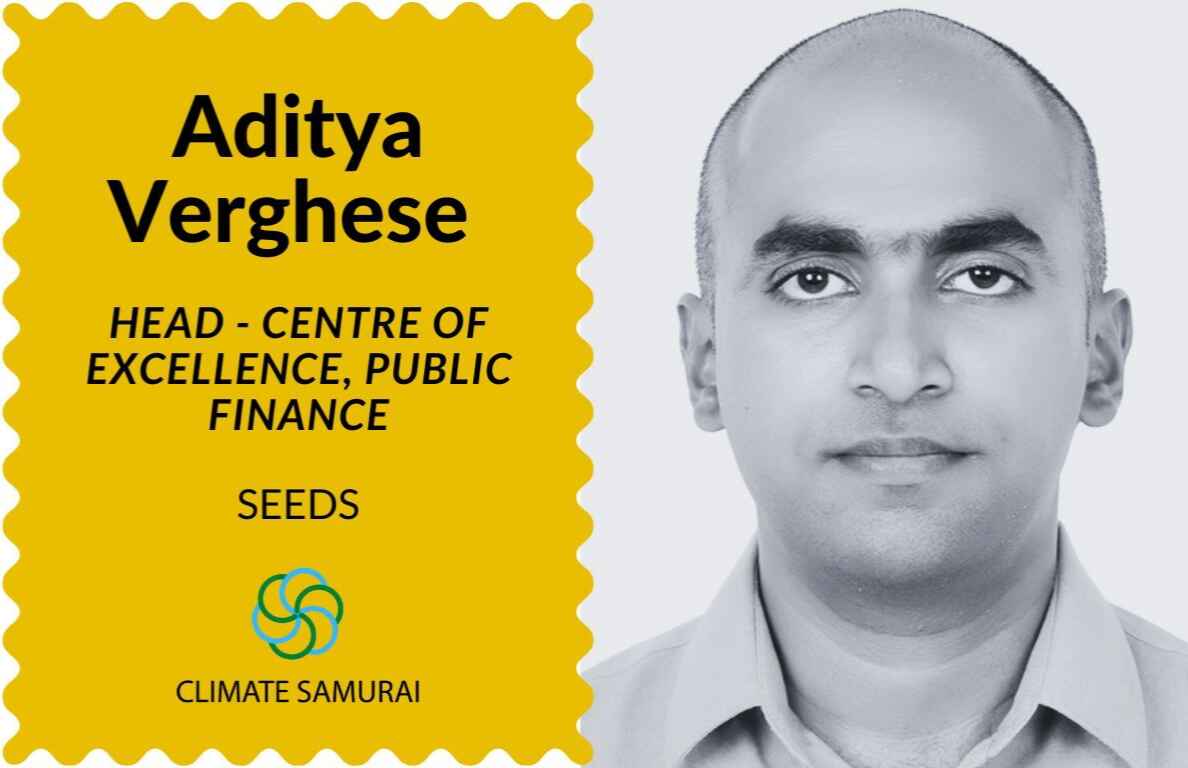
Aditya Verghese, Head – Centre of Excellence, Public Finance at Sustainable Environment and Ecological Development Society (SEEDS)