

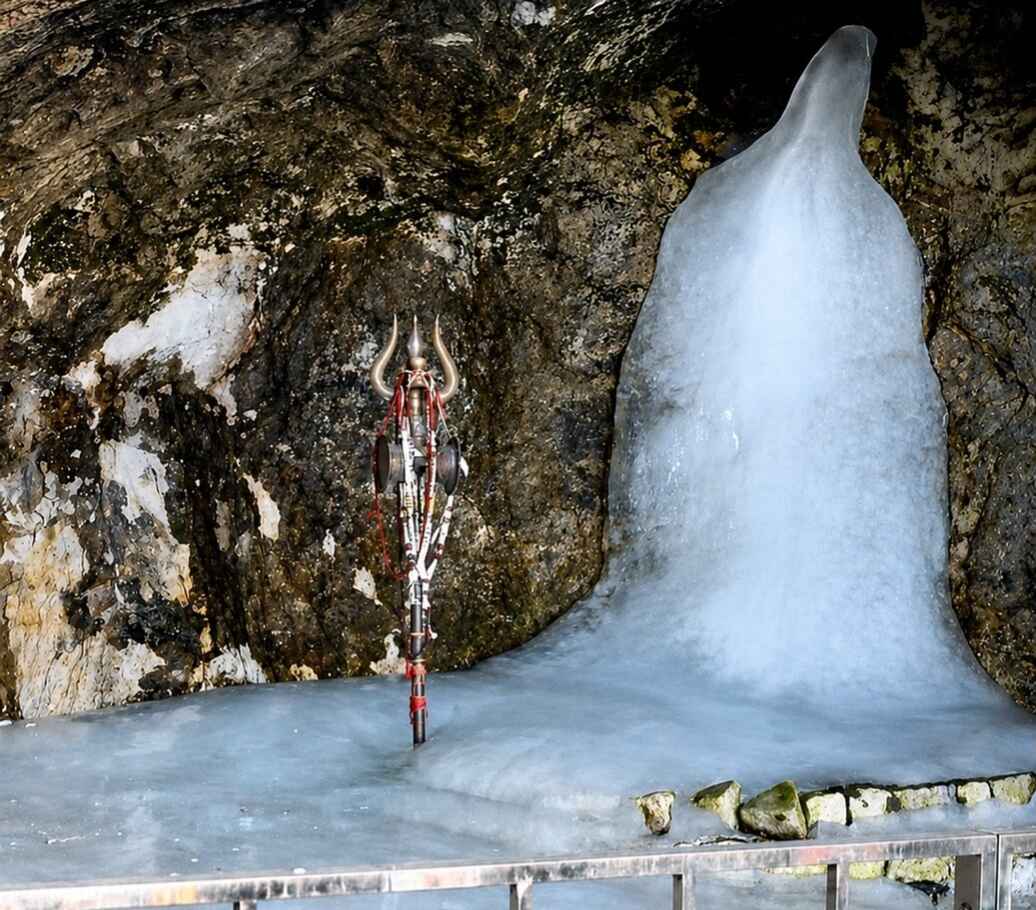
The rapid shrinking of the Amarnath ice Shivling has reignited concerns over climate change, Himalayan warming and increasing human activity. While no scientific study has identified a single cause, experts say multiple factors are likely influencing the sacred ice formation.
The early melting of the sacred Amarnath ice Shivling has once again triggered debate over the impact of climate change and rising human activity in the fragile Himalayan ecosystem.
As thousands of devotees continue their pilgrimage to the holy cave shrine in Jammu and Kashmir, reports suggest that the naturally formed ice lingam has shrunk dramatically within the first week of this year’s Yatra.
Although the Amarnath Yatra continues uninterrupted and devotees are still offering prayers, the shrinking ice formation has raised environmental concerns that extend beyond religious significance.
Here are 10 Things that You Should Know About the Melting of the Amarnath Shivling
1. The Amarnath Shivling is a Natural Ice Formation
Unlike man-made idols, the Amarnath Shivling is a naturally occurring ice stalagmite formed by freezing water droplets inside the cave. Its size changes every year depending on snowfall, temperature, humidity and weather conditions.
2. Climate Change is Considered a Major Factor
Scientists have consistently warned that the Himalayan region is warming faster than many other mountain ecosystems.
Rising temperatures, erratic snowfall and changing weather patterns can directly affect the formation and longevity of the ice Shivling.
3. Heatwaves are Reaching High Himalayan Regions
Recurring heatwaves and warmer-than-normal temperatures in Jammu and Kashmir are increasing ambient temperatures even at nearly 3,900 metres above sea level, making the ice formation more vulnerable to melting.
4. Human Presence Can Alter the Cave’s Microclimate
Thousands of pilgrims entering the cave every day generate body heat and release carbon dioxide. Helicopter operations, generators and other human activities may also contribute to slight temperature increases inside and around the cave.
5. Infrastructure Expansion Raises Environmental Questions
Road widening, temporary shelters, community kitchens, electricity, solar lighting and proposed projects such as the ropeway have improved accessibility but have also sparked concerns about their cumulative impact on the fragile Himalayan ecosystem.
6. This Isn’t the First Time the Shivling Melted Early
Early melting has been reported several times over the past two decades, including in 2004, 2006, 2007, 2016, 2018, 2020, 2022 and 2024. This year’s rapid shrinkage has renewed calls for long-term scientific monitoring.
7. Record Pilgrim Numbers Add Pressure
Despite security concerns following the 2025 Pahalgam terror attack, the Amarnath Yatra has witnessed a remarkable surge in pilgrims. Tens of thousands visited the shrine within the first few days, increasing pressure on local infrastructure and the surrounding environment.
8. No Official Scientific Study Has Identified a Single Cause
While climate change is widely regarded as a significant contributor, there is currently no official scientific assessment attributing the rapid melting solely to global warming or pilgrim footfall. Experts believe multiple environmental and human factors are likely interacting.
9. The Yatra Continues Despite the Shrinking Shivling
The disappearance or reduction in the size of the ice lingam does not stop the annual pilgrimage. Devotees continue to visit the cave shrine and offer prayers, as the spiritual significance of the Amarnath Yatra extends beyond the physical size of the ice formation.
10. The Incident Highlights the Need to Protect the Himalayas
The melting of the Amarnath Shivling has become another reminder of the vulnerability of the Himalayan ecosystem.
Balancing religious tourism, infrastructure development and ecological conservation will be critical to preserving one of India’s most revered pilgrimage sites for future generations.
Climate Warning
Whether driven primarily by global warming, changing weather patterns or increased human activity, the early melting of the Amarnath Shivling underscores the growing environmental challenges facing the Himalayas.
As pilgrim numbers continue to rise, environmentalists are calling for scientific studies, sustainable pilgrimage management and stronger conservation measures to ensure that faith and ecology can coexist in one of India’s most sensitive mountain landscapes.