

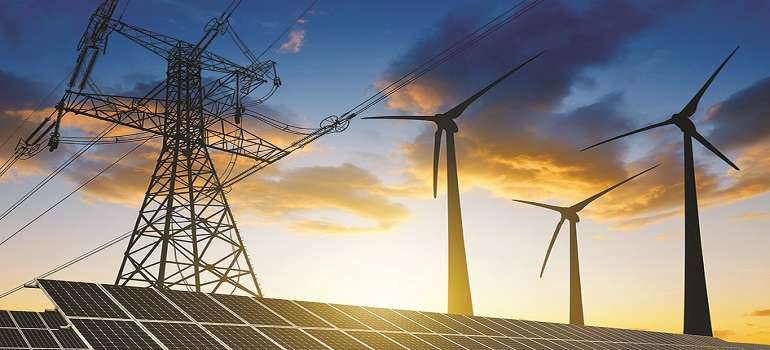
Renewable power generation rose 9.8% in 2024, led by solar and wind, while IRENA warns the world needs to nearly triple renewable electricity by 2035 to stay on track for the energy transition.
Renewable electricity recorded its fastest annual growth in years during 2024, strengthening the global shift toward clean energy.
According to the Renewable Energy Statistics 2026 released by the International Renewable Energy Agency (IRENA), renewable electricity generation increased by 9.8% last year, far outpacing non-renewable sources, which grew by just 1.4%.
Renewables generated 9,836 terawatt-hours (TWh) of electricity in 2024, accounting for 31.7% of global electricity generation.
The figures underline the growing role of clean energy in powering economies, although IRENA says the pace still falls short of what is needed to meet long-term climate goals.
The report comes as the incoming COP31 Presidency of Türkiye has proposed a global target to increase electrification to 35% of final energy demand by 2035.
According to IRENA, achieving that goal would require renewable electricity’s share in global power generation to jump from today’s 31.7% to 78% by 2035—roughly 2.5 times the current level.
“The technologies already exist and the economics are increasingly in favour of clean energy,” said IRENA Director-General Francesco La Camera, adding that the next decade must see a rapid shift away from fossil fuels toward renewable electricity across transport, buildings and industry.
The data also highlights the growing dominance of solar and wind energy, which continued to drive most of the increase in renewable generation worldwide.
Asia leads the global clean energy surge
Asia remained the world’s largest renewable electricity producer in 2024, generating 4,589 TWh, a 14.3% increase over the previous year. Strong growth in solar and wind installations played a major role in the region’s performance.
Europe produced 1,758 TWh, up 7.2%, supported by expanding solar and hydropower generation. North America generated 1,535 TWh, recording 5.8% growth, while South America reached 1,047 TWh, growing 2.9%.
Among other regions, the Middle East posted the fastest growth rate at 17.3%, although from a smaller base, generating 76 TWh. Africa produced 227 TWh, Eurasia 411 TWh, Oceania 138 TWh, and Central America and the Caribbean generated 55 TWh.
UN Climate Change Executive Secretary Simon Stiell said the latest figures reinforce the growing momentum behind clean energy, noting that renewable electricity is becoming more affordable and resilient. However, he stressed that progress remains uneven and called for stronger financial support for developing and climate-vulnerable nations to accelerate the transition.
Renewable capacity continues to expand
IRENA also updated its renewable capacity figures for 2025. The revised data shows that the world added a record 693 GW of renewable capacity during the year, taking total installed renewable capacity to 5.2 terawatts (TW) by the end of 2025.
Renewables accounted for 49.5% of global installed power capacity.
Although their share in total capacity additions slipped to 85.7% in 2025 from 92.7% a year earlier, renewable deployment continued to grow much faster than fossil fuel-based power.
The latest numbers paint a mixed picture. Clean energy is expanding at record speed, driven largely by solar and wind, but the scale of growth still needs to increase dramatically if the world is to meet its climate and electrification ambitions over the next decade.