

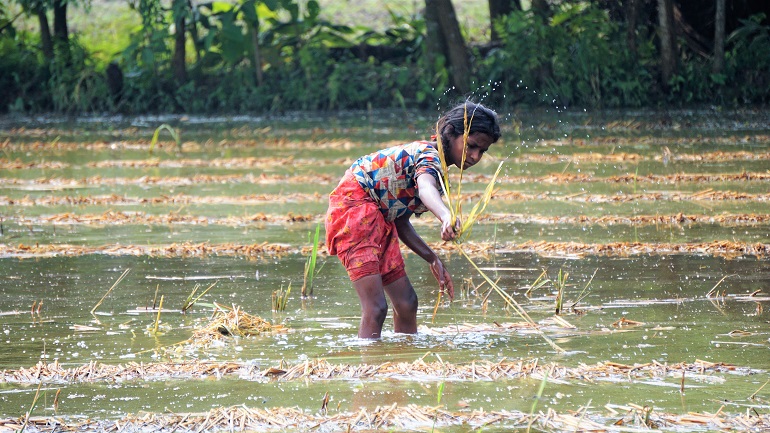
Assam floods explained: The Brahmaputra, heavy monsoon rainfall, deforestation, sedimentation and ageing embankments are combining to make floods more destructive in the state.
Assam is once again battling severe flooding, with thousands of people displaced across several districts as the Brahmaputra and its tributaries remain swollen.
The immediate cause may appear obvious—the overflowing Brahmaputra—but the state’s recurring flood crisis is the result of a much more complex combination of geography, rainfall, sediment, deforestation, river erosion and decades of flood-management practices.
Here are five things that you should know about why Assam floods so frequently and why the crisis is becoming increasingly difficult to manage.
1. The Brahmaputra carries an enormous volume of water and sediment
Assam lies largely within the floodplain of the Brahmaputra, one of the world’s major rivers. The river enters the region after flowing through the Tibetan Plateau and Arunachal Pradesh before passing through Assam and eventually reaching the Bay of Bengal.
During the monsoon, the river receives water from intense rainfall, Himalayan snowmelt and more than 50 tributaries. The river also carries huge quantities of sand and silt from the mountains.
As the river reaches flatter terrain, its flow slows down. This reduces its ability to carry all the sediment, which is then deposited across the floodplain. Over time, this process can raise riverbeds and increase the risk of flooding.
2. Deforestation is increasing soil erosion and sediment flow
Flooding in Assam is not only about how much rain falls from the sky. What happens upstream also plays a major role.
Deforestation in the hills can loosen soil and increase erosion. During heavy rainfall, the exposed soil is more vulnerable to being washed away, while landslides can send large amounts of sediment into rivers.
This additional sediment eventually travels downstream, adding to the Brahmaputra’s already heavy sediment load.
Experts have argued that flood management must therefore focus more strongly on upstream soil conservation and protection of hill ecosystems, rather than relying only on downstream embankments.
3. Assam receives intense monsoon rainfall—and climate change may be amplifying extreme events
Assam is among India’s wettest states, receiving roughly 2,800–3,000 mm of annual rainfall, with the majority arriving during the southwest monsoon.
Its geography, moisture-laden winds from the Bay of Bengal and active monsoon systems all contribute to heavy rainfall in the region.
But the climate crisis is adding another layer of risk. Experts say climate change is intensifying rainfall extremes and raising the peaks of flood events.
This does not mean that every flood can be directly attributed to climate change, but a warmer climate can increase the intensity of extreme rainfall events and make already vulnerable regions more exposed.
4. Decades of embankment construction have not solved the problem
Assam has built hundreds of embankments since the 1950s to protect communities and farmland from rising rivers. However, many of these structures have now exceeded their original design life.
There is also a fundamental challenge: the Brahmaputra is a highly dynamic river that can change its course. A fixed embankment may protect one location, but it cannot always control a river that naturally shifts across its floodplain.
This is why experts increasingly argue that flood management cannot depend entirely on embankments and other hard infrastructure. River behaviour, erosion, wetlands, floodplains and upstream landscapes must all be considered together.
5. Assam may need to learn to live with floods—not simply try to stop them
Floods have been a recurring part of Assam’s ecological and social history. The challenge is to reduce the destruction while recognising the natural behaviour of the river system.
Experts have pointed to traditional flood-resilient housing practices used by communities such as the Mising people as one possible source of lessons. Homes designed for flood-prone landscapes, better early-warning systems, basin-wide river management, stronger upstream conservation and more careful construction in floodplains could all play a role.
The larger lesson is clear: Assam’s flood crisis cannot be solved by looking at the Brahmaputra alone. The river, the hills, the forests, the monsoon, climate change and human development are all part of the same system.
As extreme weather events become more intense and flood-prone landscapes face growing pressure, the question for Assam is no longer simply how to hold back the water. It is how to build communities and infrastructure that can survive a river that is constantly changing.
This article is an original Climate Samurai analysis based on publicly reported information and expert perspectives cited in the linked explainer. The current flood situation cited in the source includes 10 reported deaths, more than 3.63 lakh people displaced and flooding across 15 districts as of July 22, 2026. (Hindustan Times)