


The ergonomic organiser turns agricultural waste into a functional workspace accessory, but how far does its sustainability story really go?
Sustainability products often make big claims, but the real test is simpler: does the product work well enough to become part of everyday life?
The Everyday Organisers Apex Ergonomic Organiser with Phone Stand from the house of XECH Technologies takes an interesting approach by using rice husk and bio-based materials to create a functional desk accessory.
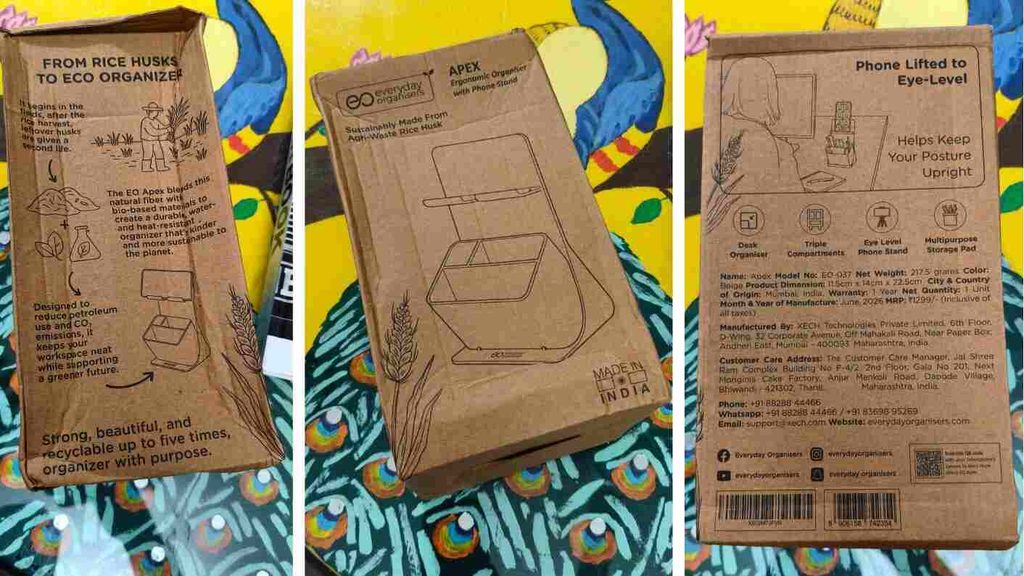
The packaging reads the product is designed to reduce petroleum-based material use and describes it as water- and heat-resistant. It is also marked “Made in India.”
The interesting part starts with rice husk
The strongest sustainability story right here is the material used.
The product packaging highlights that the leftover rice husks from agricultural fields are given another use by combining the natural fibre with bio-based materials. This is an interesting example of agricultural waste being converted into a consumer product, rather than simply being treated as waste.
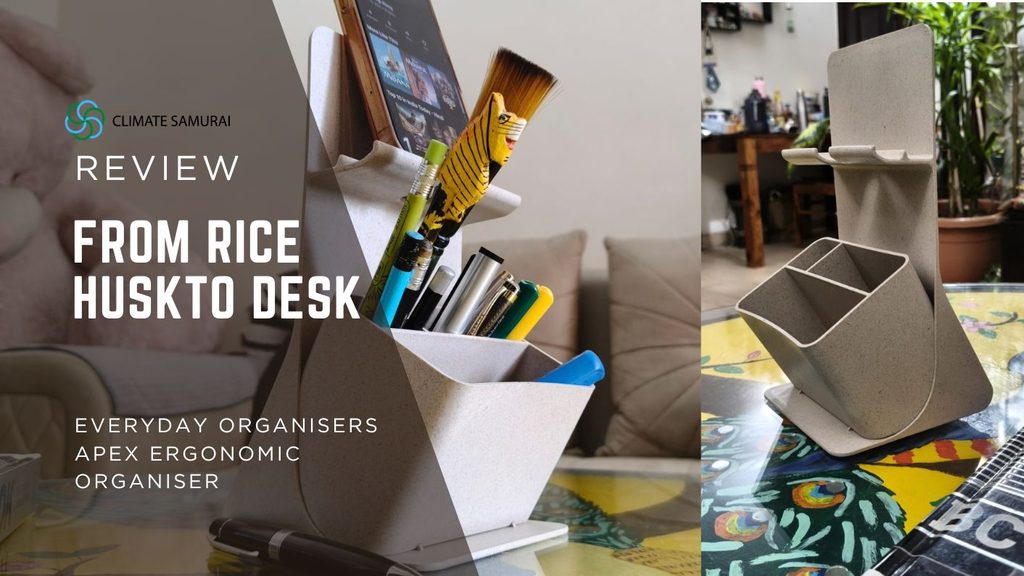
The organiser has a distinctive natural, fibre-like appearance. Unlike many conventional plastic desk organisers, it does not try to hide its material identity. The visible texture actually becomes part of its aesthetic.
However, claims such as reduced CO₂ emissions and environmental benefits should ultimately be assessed against the product’s complete lifecycle, including the binder/material composition, manufacturing process, durability and end-of-life options. Using agricultural waste is a positive material choice, but it does not automatically make a product impact-free.
Designed for an actual messy desk
The Apex is not just a decorative sustainable product.
It comes with three separate compartments (Which I personally liked and its was completely guilt free) that can be used for pens, pencils, markers, rulers and other small stationery items. The angled design makes the contents relatively easy to see and grab rather than forcing users to dig through a deep box.
There is also a dedicated phone stand built into the upper section, making it useful for a workspace where the smartphone regularly shares space with stationery.
The detachable stationery-holder design is another practical touch. It means the organiser can be adapted depending on how much desk storage is needed.
The design is functional without looking overly industrial
The organiser has a compact footprint, while the sloping front gives it a more contemporary look. Its neutral, earthy appearance should work particularly well in home offices, study tables and workspaces where users want to move away from glossy plastic accessories.
One thing that immediately stands out is the weight and structure. The organiser feels more like a solid desk accessory than a lightweight disposable plastic container. That matters because sustainability also depends on whether a product is durable enough to remain in use for years.
The sustainability claim needs a little more transparency
Though design and use of rice husk definitely has an edge, but on sustainability claim I would like to have more transparency would like to see more information from the manufacturer.
“The packaging states that the Apex is made from rice husk, combines natural fibre with bio-based materials, is water- and heat-resistant and is designed to reduce petroleum use and CO₂ emissions. It also says the organiser is recyclable up to five times.”
Those are significant sustainability claims. For environmentally conscious consumers, “it would be useful if the company also disclosed the percentage of rice husk used, the exact bio-based material/binder, recyclability infrastructure and what happens to the product at the end of its useful life.“
That information would allow consumers to distinguish between a product that contains agricultural waste and one whose entire lifecycle has been designed around circularity.
The first impression: useful first, sustainable second
That, in my view, is the most important aspect of the Apex.
It doesn’t require the user to make a major lifestyle compromise in order to choose a more sustainable material. It performs the basic job expected from a desk organiser—holding stationery and supporting a phone—while incorporating agricultural waste into the product.
The sustainability story makes it interesting; the functionality is what can make it useful.
For a product review, I would also like to see how it performs over several months of daily use, particularly the durability of the material, resistance to moisture and heat, and whether the compartments and phone stand remain sturdy with regular handling.
Our Take
The Apex is a good example of where sustainable product design can become more meaningful: using waste from agriculture as an input for an everyday product rather than treating sustainability as an afterthought.
But consumers should look beyond words such as eco, green and sustainable. The real environmental story lies in what the product is made from, how much conventional material it replaces, how long it lasts and what happens to it when its useful life ends.
The Apex gets the first two parts of that conversation started. The next step for XECH is greater transparency around the material composition and end-of-life pathway.
Looking into the festival season, this can be considered one of the best gift for this season if you or your organization is sustainable and environment conscious.
Disclosure: This product was received from XECH Technologies for independent review. The product was reviewed based on first-hand examination and the information displayed on its packaging by the company. Receipt of the product does not influence the editorial / Journalistic assessment of Climate Samurai.