

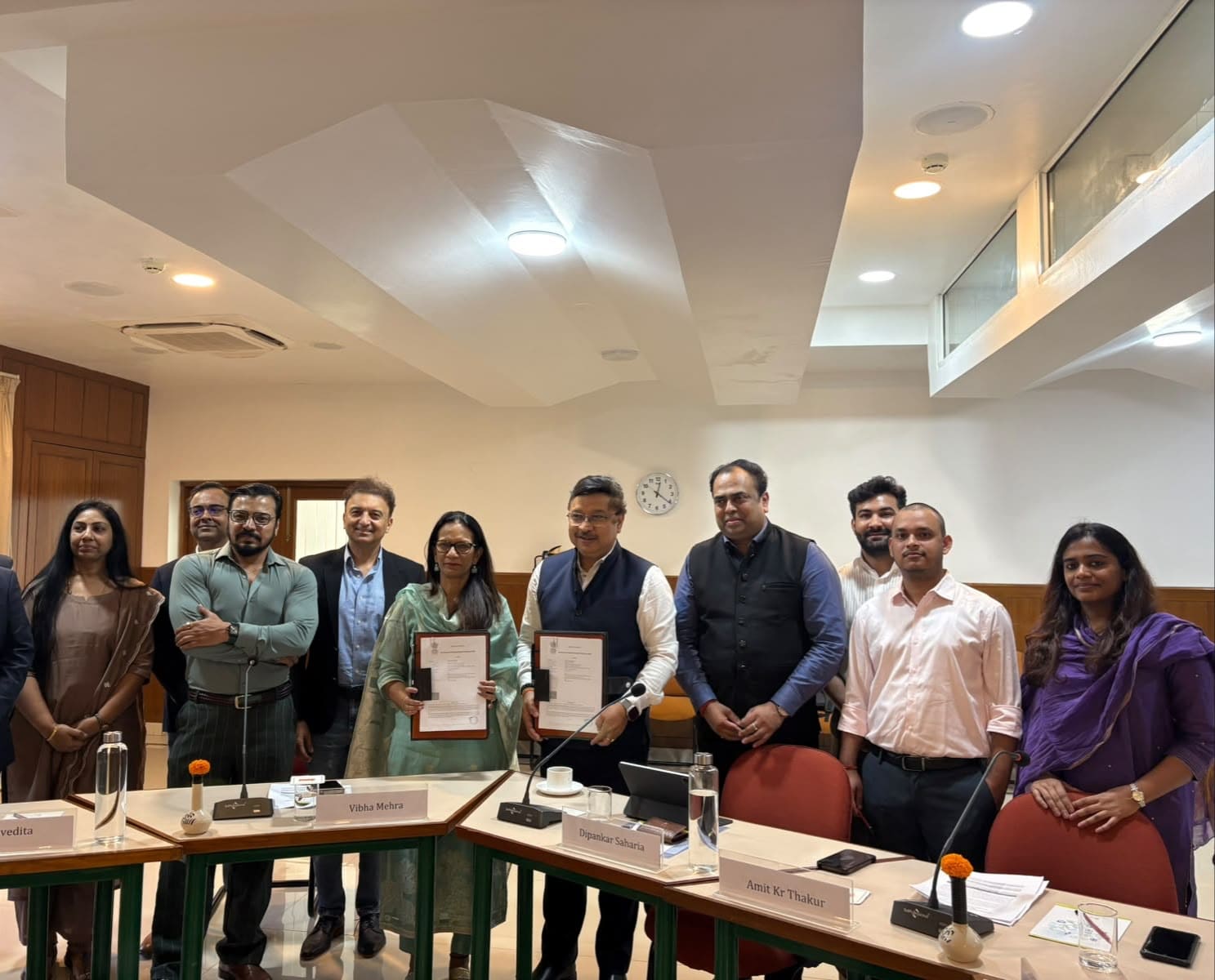
The 24-month pond restoration project will focus on water conservation, groundwater recharge, plantation of native species and community infrastructure, with around 22,000 people expected to benefit directly.
The Energy and Resources Institute (TERI) and the tech giant Nokia India have partnered to rejuvenate 10 ponds in Haryana’s Rewari district, aiming to strengthen water security for households and agricultural activities while restoring local ecosystems.
Both the organisations formalised the partnership by signing a Memorandum of Understanding (MoU) at TERI Gram, Gwal Pahari.
The agreement was signed by Dr Dipankar Saharia, Executive Director, TERI, and Vibha Mehra, Country Manager, Nokia India, in the presence of representatives from both organisations.
Supported through Nokia India’s Corporate Social Responsibility (CSR) initiative, the project will combine pond rejuvenation with plantation activities and community participation. The initiative is scheduled to run for 24 months.
Haryana, despite being a major agricultural and industrial state, faces persistent water stress. The project aims to improve local water availability, enhance storage capacity and support groundwater recharge through the restoration of existing village ponds.
Five Things to Know About the TERI-Nokia Pond Rejuvenation Project
1. Ten ponds to be rejuvenated in Rewari
The project will focus on restoring 10 ponds across Rewari district in Haryana. The initiative aims to revive local water bodies and strengthen their role in meeting domestic and agricultural water requirements.
2. Target to conserve 1.2 lakh cubic metres of water
One of the project’s major targets is to conserve 1,20,000 cubic metres of water over 24 months. It also aims to enhance the ponds’ combined water storage capacity to 120 million litres, contributing to improved local water availability and recharge.
3. Plantation of 200 native species
Ecological restoration will be another key component, with plans to plant 200 native species around the ponds. The plantation drive is intended to increase green cover and improve the surrounding environment.
4. Community infrastructure and safety measures
Beyond water conservation, the project will introduce infrastructure to make the restored pond areas more accessible and useful for local residents. Plans include installing 100 streetlights to improve safety and eliminate dark zones, along with benches and dustbins to develop community recreational spaces.
5. Around 22,000 direct beneficiaries
According to the project estimates, approximately 22,000 people are expected to benefit directly, based on Census 2011 data. Another 50,000 people are projected to benefit indirectly through improved water conservation, groundwater recharge and ecological restoration.
Community Participation at the Centre
The project places local communities at the centre of pond restoration and long-term maintenance.
During the MoU ceremony, Rashmi Murali, Fellow, TERI, outlined the project’s objectives, implementation approach and the role of community participation in ensuring the sustained upkeep of the restored water bodies.
Speaking at the event, Dr Dipankar Saharia, Executive Director, TERI, said the partnership would bring scientific solutions and community-led conservation together to address water-related challenges.
He highlighted that the initiative extends beyond water security, with the potential to improve green cover, support local livelihoods and strengthen community engagement in natural resource conservation.
Vibha Mehra, Country Manager, Nokia India, said the collaboration reflects the company’s commitment to supporting grassroots development, restoring local ecosystems and strengthening environmental resilience.
As part of the ceremony, representatives from TERI and Nokia also participated in a plantation activity at the Rose Garden on TERI Gram’s 100-acre green research campus in Gwal Pahari.
Water Security and Ecological Restoration in Haryana
The TERI-Nokia partnership comes against the backdrop of growing concerns over water availability and the need to strengthen local water management systems.
Village ponds can play an important role in water conservation, groundwater recharge and supporting surrounding ecosystems. However, their long-term effectiveness depends on restoration, regular maintenance and community participation.
By combining pond rejuvenation, native plantation and community infrastructure, the project seeks to create shared natural assets that can serve local communities beyond the implementation period.
The project’s progress over the next 24 months will be significant in determining how effectively the targeted water conservation, storage enhancement and ecological restoration outcomes translate into long-term benefits for Rewari’s communities.