

Indian manufacturer’s $25M investment in a Jafza-based assembly plant marks a major milestone for the ‘Make in India’ initiative and positions the company to serve the growing Middle East and Africa markets.
Omega Seiki Mobility (OSM), a leading Indian electric vehicle (EV) manufacturer, is making a bold move onto the global stage with the launch of its first international assembly plant in Jafza, Dubai.
This significant expansion, backed by a USD 25 million investment, signals not only the company’s aggressive growth strategy but also the growing influence of India’s manufacturing prowess under the ‘Make in India’ initiative.
This development serves as a tangible example of the “Make in India” program’s evolution from a domestic policy to a global export strategy. By establishing an assembly hub in the UAE, a key trade and logistics gateway, OSM isn’t just selling to the Middle East and Africa (MENA); it’s using a regional hub to manufacture closer to the end consumer, ensuring more efficient distribution and cost management.
This approach directly aligns with the broader goals of “Make in India”—to foster a competitive manufacturing ecosystem that can serve not only the domestic market but also become an integral part of global supply chains.
Strategic Location and Economic Impact
The choice of Jafza is a calculated move. As a major free zone within DP World’s extensive network, it provides unparalleled connectivity to over two billion consumers across the MENA region.
The new 42,000-square-foot facility, which will assemble OSM’s electric two- and three-wheelers, is expected to create over 100 jobs in its initial phase. This move will also boost UAE-India trade in the clean technology sector, a key area of bilateral cooperation.
The timing couldn’t be better, as the MENA EV market is projected to reach $14.5 billion by 2029. This growth is driven by supportive government policies and an increasing demand for low-emission transport.
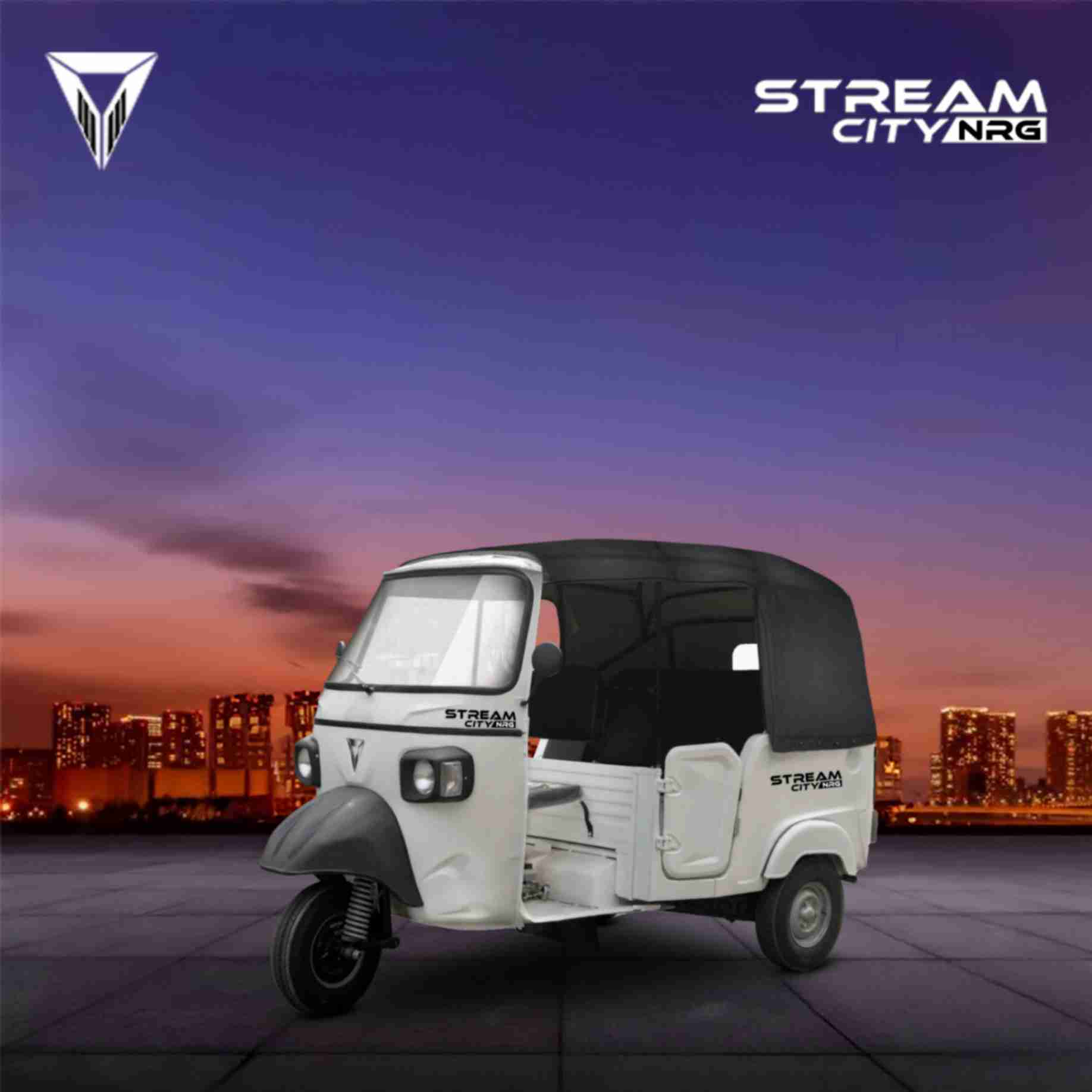
OSM’s product line, including the cargo-focused OSM Rage+ and passenger-friendly OSM Stream, is well-positioned to capitalize on this market, particularly in the commercial and logistics sectors where three-wheelers are a common mode of transport. The company’s prior success in India, with over 20,000 vehicles sold, provides a strong foundation for its international push.
A Pragmatic Approach to Global Expansion
While the primary focus is on EVs, OSM’s strategy also includes a pragmatic nod to market realities. The company plans to introduce CNG-powered models for select African markets. This recognizes that in many regions, the EV infrastructure is still nascent, and CNG offers a practical, clean-fuel alternative.
This dual-fuel approach demonstrates a flexible and commercially viable strategy that acknowledges the varying levels of technological and infrastructural readiness across different markets.
In summary, OSM’s expansion is more than just a new factory; it’s a testament to the maturation of India’s EV industry and its ability to compete on a global scale. It exemplifies how “Make in India” is enabling domestic companies to not only innovate but also to export their solutions and expertise, transforming India into a pivotal player in the future of clean mobility.