

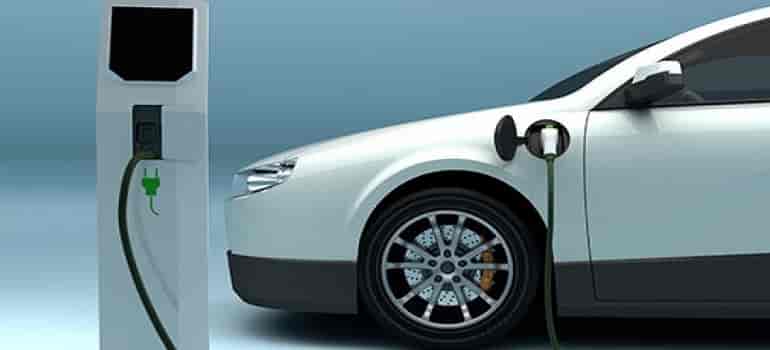
The initiative identifies critical skill gaps in EV charging infrastructure and introduces ‘Future-In-Charge’, a hands-on training programme aimed at creating a climate-ready workforce to support India’s clean mobility transition.
Strengthening India’s climate action and electric mobility ambitions, Mercedes-Benz Research and Development India (MBRDI) and The Energy and Resources Institute (TERI) have jointly released a pioneering whitepaper on skilling for EV charging infrastructure. The announcement came during the third edition of Mercedes-Benz Sustainability Dialogue India 2025, a platform that brings together global and national leaders to deliberate on climate challenges and sustainable growth pathways.
The whitepaper, “EV Charging in India: Ecosystem Perspectives and Skilling Opportunities”, underscores the central role of charge point operators (CPOs) in enabling the country’s transition to clean mobility. It identifies critical bottlenecks, including the absence of standardised training modules, limited hands-on learning opportunities, and a shortage of qualified trainers who can integrate both technical and operational expertise.
Insights from over 150 stakeholders across the EV value chain reveal that nearly half of the skills needed for CPOs are concentrated in the areas of installation, testing, and IoT-enabled digital applications. Additional requirements include troubleshooting, service quality optimisation, and integration with smart grids—key elements for building resilient and climate-aligned infrastructure.
‘Future-In-Charge’: A Green Skills Initiative
To address these challenges, MBRDI and TERI have launched Future-In-Charge, a flagship training programme under Mercedes-Benz’s Sustainability Garage initiative. Designed with approval from the National Council for Vocational Education and Training (NCVET) and endorsed by the Ministry of Environment, Forest and Climate Change (MoEFCC), the programme combines classroom learning with hands-on training to build a future-ready EV charging workforce.
“True sustainability goes beyond technological innovation—it is about enabling people with the right skills,” said Manu Saale, MD & CEO, MBRDI. “With Future-In-Charge, we aim to bridge systemic gaps in EV skilling while creating a scalable model that integrates smart grid and IoT know-how into India’s clean mobility framework.”
The pilot batch of 60 trainees has already commenced at TERI’s Gwal Pahari campus, where participants are gaining exposure to real-world charging equipment. The programme is set to scale across multiple locations in partnership with CPOs, industry players, and academic institutions.
Commenting on the collaboration, Dr. Vibha Dhawan, Director General of TERI, said: “As India accelerates towards clean transportation, building human capital in EV charging is indispensable. Future-In-Charge is a forward-looking step to align youth talent with industry demands, creating green jobs and strengthening the nation’s climate resilience.”
Towards Climate-Smart Mobility
By spotlighting the intersection of skilling, technology, and sustainability, the initiative underscores how innovation in workforce development can directly accelerate climate-positive transitions. The dialogue featured perspectives from leaders across policy, industry, and academia, including Renata Jungo Brüngger (Mercedes-Benz Group AG), Santosh Iyer (Mercedes-Benz India), Amit Verma (NITI Aayog), and Isabelle Tschan (UNDP India).
With EV infrastructure emerging as a cornerstone of India’s decarbonisation agenda, the whitepaper and training initiative mark a decisive step towards building climate-smart mobility solutions powered by skilled human capital.