

Viral Confrontation and BBC Investigation Lay Bare the Violent Suppression and Toxic Ecological Cost Behind India’s Biofuel Drive
A harrowing piece of viral footage capturing a field journalist facing intimidation from private enforcers has brought India’s aggressive ethanol blending goals into sharp, critical focus.
Filmed on the ground at the volatile Meghalaya–Assam border, the Instagram reel exposes the high-stakes friction between independent environmental reporting and corporate industrial interests.
By analyzing this confrontation alongside groundbreaking ground reports from international media, a deeply unsettling picture emerges of Byrnihat, Meghalaya—an industrial border town that was shockingly ranked the world’s third most polluted area by the Swiss air quality tracker, IQAir.
The Anatomy of the Two Videos: Ground Reporting vs. The Silencing Effect
The two separate pieces of investigative footage offer a visceral look at the human and ecological crisis unfolding on the ground:
1. The Instagram Reel: Intimidation on Camera
The footage shared widely on Instagram captures a brave local journalist attempting to document the physical evidence of environmental degradation near a local ethanol distillery.
Instead of public transparency, the reporter is met with immediate, hostile pushback from private individuals trying to censor the lens.
This video is critical evidence of the dangers field reporters face when exposing corporate violations. It highlights the lengths to which private interests will go to mask the production of “spent wash”—a highly toxic, dark, acidic wastewater byproduct of ethanol distillation that can devastate aquatic life and agricultural soil if left untreated.
2. The BBC Hindi Ground Report: Life in the Choke Zone
Complementing this exposure is the comprehensive video report by journalists Prerana and Prabhat Tiwari of BBC Hindi. Their investigation moves past the corporate gates and into the homes of Byrnihat’s 6,000 residents, showing that pollution is no longer a mere statistic—it is “etched into daily life.”
The BBC’s footage vividly maps out how dense, unfiltered emissions and unchecked industrial runoff are directly compromising public health.
The Tiwaris’ reporting provides the essential human context that explains why field journalists are risking intimidation to cover this area: the local population is systematically being choked by industrial development.
Who Sounded the Alarm First?
While national and international outlets like the BBC have brought global eyes to the crisis, local journalistic equity belongs to the regional reporters who blew the whistle on Meghalaya’s ethanol-induced environmental decay.
Before the issue went viral , we analysed that BBC was first to bring report on this issue a month back. Regional independent media of the Northeast and local environmental journalists also braved the highly porous, politically sensitive Assam-Meghalaya border to report on the unregulated storage of spent wash and the toxic stench blanketed over local villages.
The early, localized investigations laid the vital groundwork, providing the initial data and community testimonies that larger media networks later utilized to amplify the crisis nationally.
The Macro Policy Dilemma: The Water Math
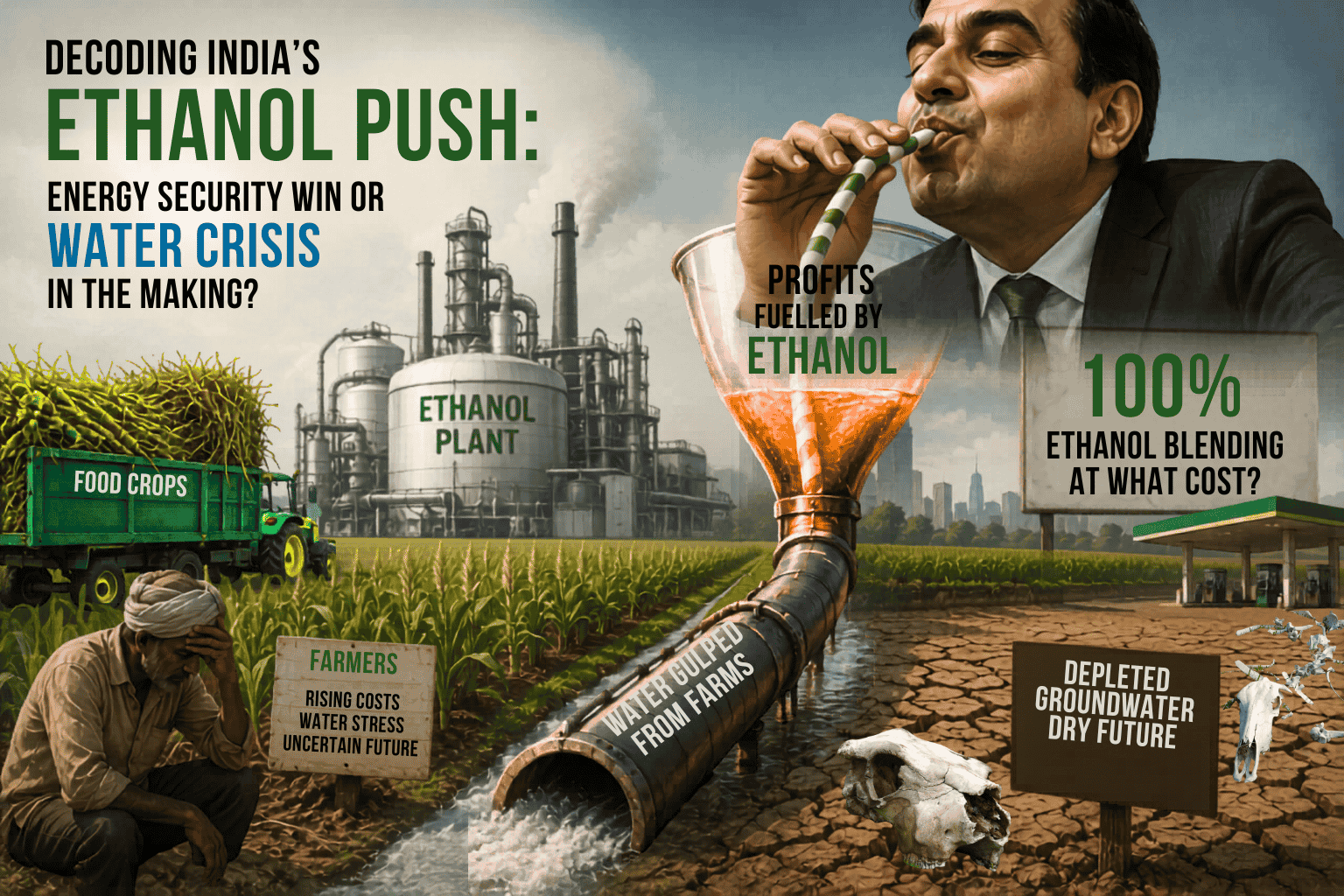
The toxic local output is driven by a broader national mandate: India’s push for high-percentage ethanol-blended fuel to reduce reliance on oil imports.
However, as senior journalist Saurabh Dwivedi recently spotlighted, the fundamental resources driving this policy are intensely strain-heavy.
| Feedstock Source | Water Required (Per 1 Litre of Ethanol) | Primary Environmental Footprint |
|---|---|---|
| Sugarcane-Based | ~2,860 Litres | Drastic depletion of groundwater reserves. |
| Grain-Based (Maize/Damaged Grain) | Lower direct crop watering | Generates a highly concentrated, chemically complex spent wash stream demanding immense energy to neutralize. |
| By transitioning rapidly to grain-based distillation in ecologically sensitive regions like Northeast India, plants are generating smaller volumes of wastewater but of a much higher, more corrosive chemical density. When plants fail to execute costly Zero Liquid Discharge (ZLD) protocols, the surrounding ecosystem pays the price. |
Press Freedom is Environmental Protection
What these videos collectively prove is that environmental accountability cannot exist without absolute press freedom.
When a town is pushed to the rank of the third most polluted place on earth, the work of journalists like Prerana, Prabhat Tiwari, and the local reporters on the ground is the final line of defense for public health.
If private entities can violently suppress field journalists on the border with impunity, environmental regulations become nothing more than paper tigers.
The integrity of India’s green energy transition rests entirely on whether the state protects the communities hosting these plants—and the journalists documenting the truth.