

Backed by Helios Climate and PIDG, the funding will drive SUN Mobility’s expansion into Africa, enhance clean mobility infrastructure, and reduce emissions across emerging markets.
SUN Mobility, a global leader in EV energy infrastructure and battery swapping solutions, has received a landmark investment from Helios Climate (HC) and the Private Infrastructure Development Group (PIDG). The deal is part of a broader funding round that has raised a total of approximately $135 million for the company over the past year.
Helios Climate, Africa’s premier climate-focused investment platform, partnered with PIDG to lead the investment. SUN Mobility, co-founded by the SUN Group and Maini Group, is backed by strategic investors including Indian Oil Corporation (IOCL), Vitol (parent of Africa’s largest fuel retailer Vivo Energy), and Bosch
The investment was publicly announced recently, marking a significant milestone in SUN Mobility’s international growth journey.
The investment will enable SUN Mobility to launch Africa’s largest battery swapping network, starting with markets where two- and three-wheelers dominate the transport ecosystem. It will also strengthen the company’s footprint in South-East Asia, enhancing the e-mobility supply chain across both regions.
The move supports affordable, scalable, and climate-resilient mobility solutions in rapidly urbanizing regions. Africa’s two- and three-wheelers currently contribute ~5% of the continent’s CO₂ emissions. With the vehicle market projected to exceed 1.9 million units annually by 2030, the timing is crucial for sustainable electrification. SUN Mobility’s battery swapping model significantly lowers EV costs by decoupling battery ownership from vehicles, addressing key barriers to adoption.
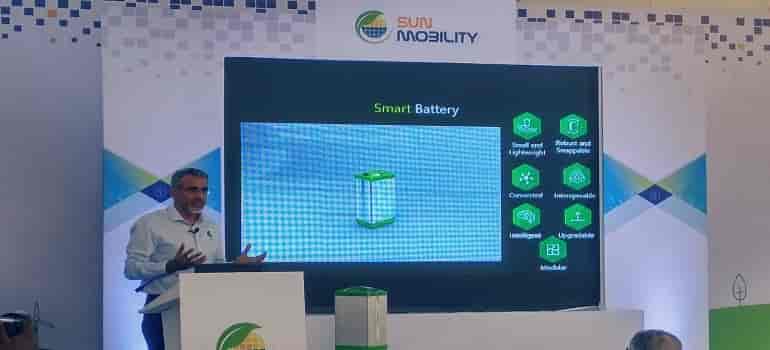
With over 900 existing battery swapping stations and 50,000 EVs powered globally, SUN Mobility will leverage its proven open-architecture technology—developed and manufactured in India—to roll out modular and interoperable solutions. The company’s ecosystem currently supports over 1.4 million monthly swaps and aims to replicate this scale in Africa, tailored to its unique transport needs.