

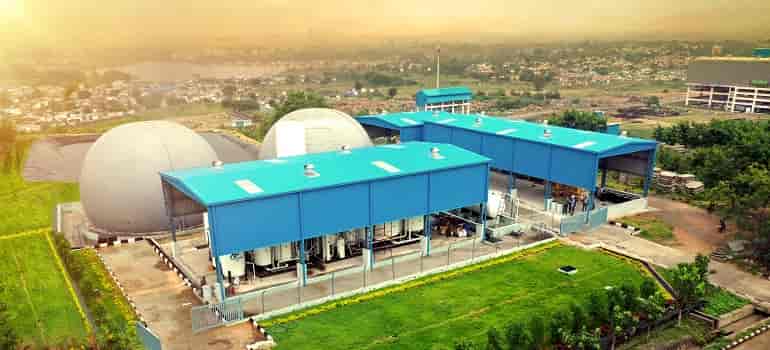
₹700 crore cluster of 10 compressed bio-gas plants in Telangana to convert agricultural waste into clean fuel, support rural incomes, and integrate with city gas networks under India’s energy transition push.
In a major push to India’s clean energy ambitions, Juno Joule Bio Fuels Private Limited has commenced construction of its flagship Compressed Bio-Gas (CBG) project at the Narmetta Industrial Area in Siddipet district.
The initiative signals a significant advancement in waste-to-energy solutions and the country’s transition toward low-carbon fuels.
The project is part of a larger cluster development plan comprising 10 CBG plants, each with a capacity of 10 tonnes per day (TPD), taking the total output to 100 TPD.
With an overall investment of ₹700 crore, the cluster is designed to strengthen India’s renewable gas ecosystem and reduce dependence on fossil fuel imports.
Phase-wise rollout to 2030
The first phase at Narmetta includes three CBG units (10 TPD each), backed by an investment of ₹210 crore. The project will be executed in three phases—Phase 1 (3 plants), Phase 2 (3 plants), and Phase 3 (4 plants)—with full completion targeted by 2029–2030. Once operational, the cluster is expected to serve as a scalable hub for bio-energy production in Telangana.
Aligning with national clean energy policies
The project is being implemented under India’s CBG–City Gas Distribution (CGD) Synchronisation Scheme, enabling the integration of renewable gas into existing urban gas networks. This aligns with key government initiatives such as GOBARdhan Scheme and the broader Atmanirbhar Bharat mission, aimed at enhancing domestic energy production and reducing import dependency.
CBG produced at the facility will be supplied through partnerships with GAIL (India) Limited and Bhagyanagar Gas Limited, ensuring steady demand for mobility and industrial use in the Hyderabad region.
Turning farm waste into clean fuel
The plants will utilise agricultural residues such as paddy straw along with organic waste including poultry litter and cattle dung to produce compressed bio-gas. This not only addresses critical environmental challenges like stubble burning and methane emissions but also promotes a circular economy by converting waste into valuable energy.
CBG sector enters high-growth phase
India’s bio-gas sector is witnessing rapid expansion, supported by policy measures such as the SATAT Initiative, which aims to scale production to 15,000 TPD. The government has also introduced mandatory blending targets for CBG in CNG and PNG—starting at 1% and rising to 5% by 2028–29.
Experts say cluster-based models like Juno Joule’s are crucial for ensuring consistent supply, efficient logistics, and seamless integration into gas distribution networks.
Rural development and economic impact
Beyond environmental gains, the project is expected to generate employment and strengthen rural supply chains. By creating demand for agricultural residue, it offers farmers an additional income stream while reducing open-field burning.
Speaking at the event, Telangana Minister Duddilla Sridhar Babu highlighted the importance of execution-driven clean energy projects, noting their dual role in industrial growth and rural development.
A scalable model for India’s energy future
According to company officials, the cluster-based approach is designed to overcome key challenges in bio-energy deployment, including feedstock availability, infrastructure integration, and market linkage. The Narmetta facility is expected to serve as a blueprint for future projects across India.
As India accelerates its transition toward sustainable energy, initiatives like this underscore the growing role of biofuels in achieving energy security, reducing emissions, and building a resilient rural economy.